Spotlight on Information Technology
-
Article Item
 Sharon P. Pitt named vice president for information technology and chief information officer , article
Pitt is currently vice president for information technologies and chief information officer at Brown University in Rhode Island. Her new position takes effect on Feb. 1, 2024.
Date: Nov 28, 2023 -
Article Item
 Virginia Tech streamlines software procurement through two new processes , article
Improved processes spearheaded by the IT Transformation Program are making it easier for Virginia Tech departments to get the software they need, when they need it.
Date: Nov 10, 2023 -
Article Item
 Moving the internet beyond its boundaries , article
This year marks the 25th anniversary of the university's first implementation of the IPv6 protocol on its networks.
Date: Mar 01, 2023 -
Article Item
 Minh-An Pence named human resources director for the Division of Information Technology , article
Minh-An Pence will lead the Division of Information Technology’s human resources (HR) team and join a growing cadre of HR division directors across the university.
Date: Jan 20, 2023 -
Article Item
 Dale Pike promoted as part of Technology-enhanced Learning and Online Strategies reorganization , article
Dale Pike, executive director of Technology-enhanced Learning and Online Strategies (TLOS), has been promoted to the rank of associate vice provost and will now report to Executive Vice Provost Don Taylor.
Date: Nov 07, 2022 -
Article Item
 Terry Herdman, associate vice president for research computing, retires after 48 years of service , article
Terry Herdman, associate vice president for research computing, director of the Interdisciplinary Center for Applied Mathematics, and professor of mathematics, retired from Virginia Tech effective Sept. 9, 2022.
Date: Sep 23, 2022 -
Article Item
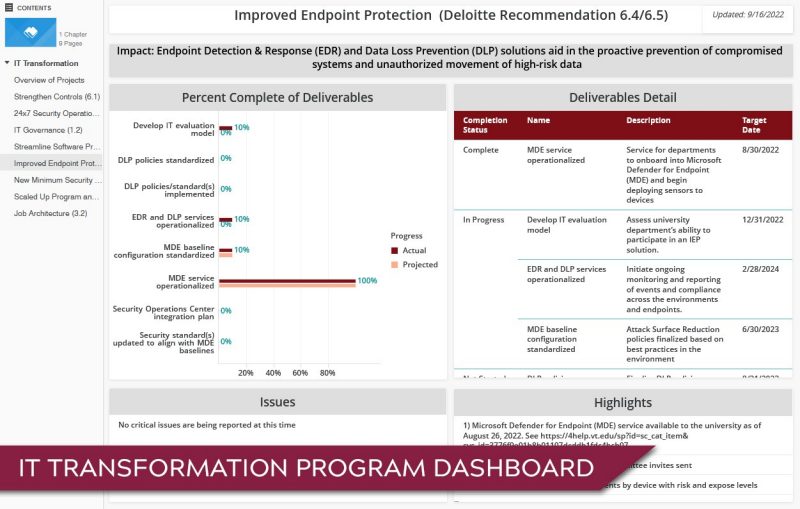 New dashboard provides updates on IT Transformation program , article
The dashboard provides a succinct overview of active and future projects, as well as detailed information about each active project, including descriptions of project highlights, deliverables, progress made on deliverables, and any existing issues.
Date: Aug 29, 2022 -
Article Item
 New interactive campus map features accessible navigation, improved user experience , article
Virginia Tech’s Blacksburg campus has a new interactive campus map with a cleaner layout, real-time update capabilities, and a navigation tool that helps users find accessible pathways.
Date: Aug 24, 2022 -
Article Item
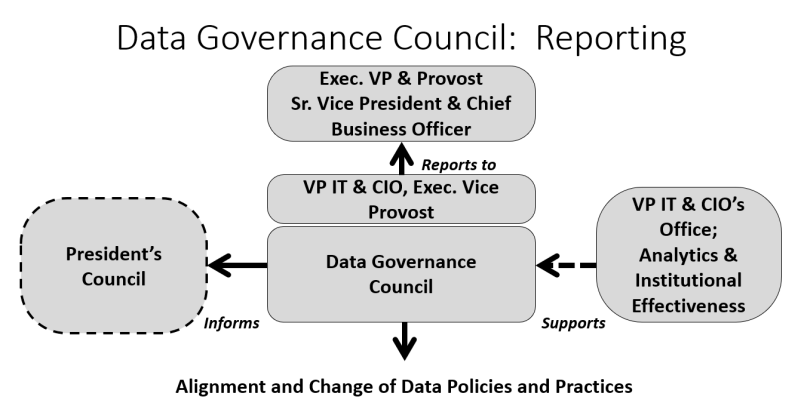 University Data Governance Council (UDGC) , article
To enhance our reporting and data analytics capabilities and to enable informed decision-making, Virginia Tech is actively evolving our ability to manage, maintain, and fully utilize institutional data. In furtherance of this objective, the University Data Governance Council (UDGC) was established in August of 2020.
Date: Aug 04, 2021 -
Article Item
 Virginia Tech celebrates 50 years of computer science , article
In January 2021, the computer science department launched a semester-long set of virtual programs to celebrate its 50th anniversary on a special dedicated site, with a video message from Cal Ribbens, computer science department head, and Julie Ross, the Paul and Dorothea Torgersen Dean of Engineering.
Date: Feb 19, 2021 -
General Item
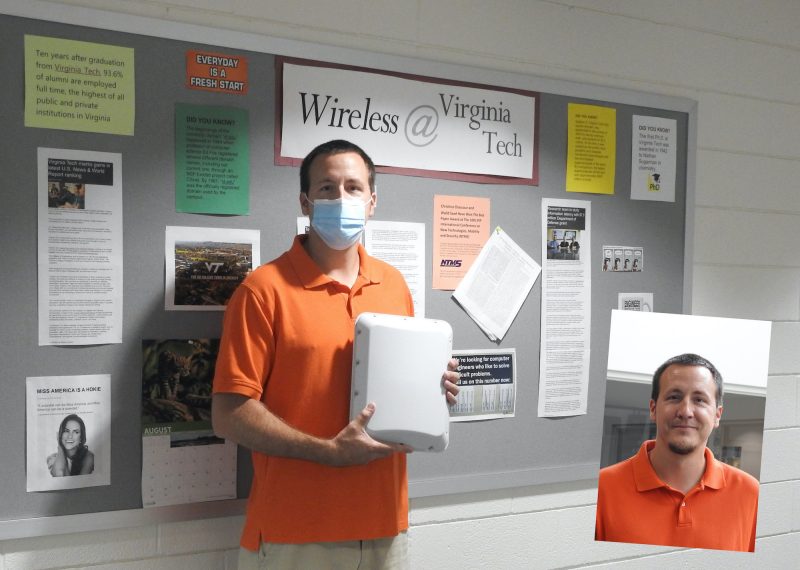 Virginia Tech’s Citizens Broadband Radio Service licenses, administered by the Division of IT, featured in Virginia Business
Virginia Business recently featured Virginia Tech's new CBRS licenses, which the Division of IT administers and played a significant role in obtaining for the university.
Date: Jan 11, 2021 -
Article Item
 Honors College assistant professor receives grant to improve student access to computational research , article
Stephanie “Nikki” Lewis, collegiate assistant professor in the Honors College, has been awarded a 4-VA Grant through the Technology-enhanced Learning and Online Strategies (TLOS) division to conduct a course redesign in the Honors College.
Date: Sep 17, 2019 -
Article Item
 Data-Driven IT Support Operations and Decision-Making: A Grassroots Effort , article
Data-driven decision-making can occur at either the strategic level or the operational level. While data-driven decision-making at the strategic level often requires a carefully considered plan, significant investment, and a top-down approach, data-driven decision-making at the operational level can be a grassroots effort that does not require significant financial or personnel investment.
Date: Apr 22, 2019 -
Article Item
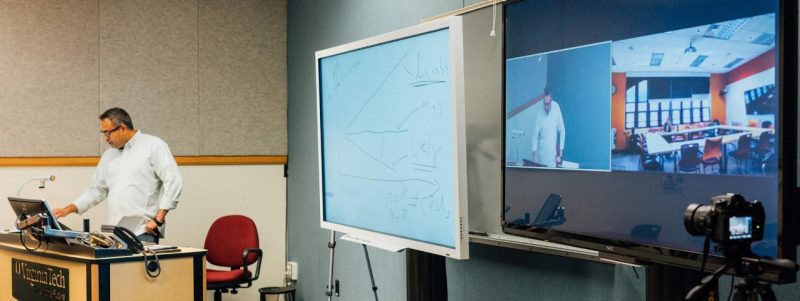 Video for Instruction: establishing a comprehensive video strategy for the future , article
It can seem a bit magical to users when enterprise-wide programs change service providers, but a peek inside the process reveals the teamwork and planning required to get from idea to launch. The VFI group was charged to evaluate all the available, innovative, and affordable service options for using video in teaching and learning with a specific focus on services not requiring proprietary hardware or file formats.
Date: Jun 26, 2018 -
Article Item
 A gradual rollout of Banner 9 has begun in some administrative offices , article
On March 12, 2018, a gradual rollout of Banner 9 administrative pages began in a few administrative offices on campus, including the Bursar’s Office, the Registrar’s Office, and others. Banner 9 is the next generation of the university's enterprise resource planning system, which provides integrated management of our core business processes.
Date: Mar 26, 2018 -
Article Item
 Hidden Figures: Into the Future , article
Come to Virginia Tech on March 20 to attend a free matinee showing of the acclaimed motion picture Hidden Figures in Haymarket Theater (doors open at 3:30pm). Events are free of charge, but you do need to pre-register so that we can keep track of how many spaces are left.
Date: Feb 12, 2018 -
Article Item
-
Article Item
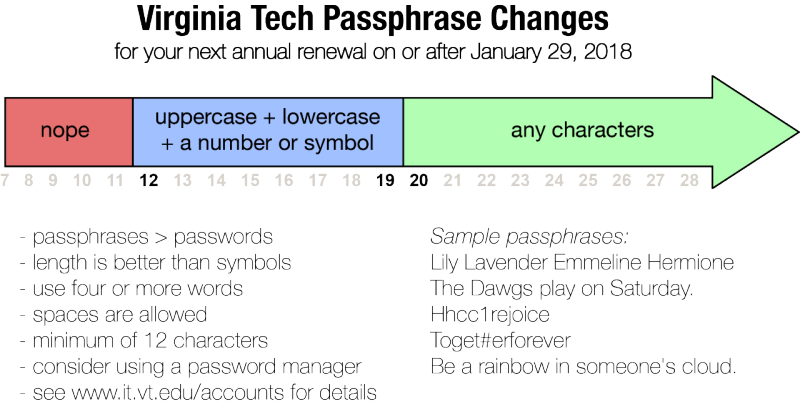 More-secure passphrases replaced passwords , article
To ensure the security of personal data and university resources, the Division of Information Technology is updating account creation and management processes and implementing new password complexity rules on January 29th.
Date: Jan 16, 2018 -
Article ItemKeeping track of your eduroam (WiFi) password is about to get easier , article
When you need to re-enter your eduroam WiFi password (aka your Network Password), can you remember it? Neither can we! To help, the process is about to get easier. Beginning January 29th, you will be able to retrieve or re-set an auto-generated password each time you need to connect a device.
Date: Jan 16, 2018 -
Article Item
 Tips to practice good online safety habits , article
Improve your online experience and increase your security by practicing good online safety habits with these tips and advice.
Date: Oct 18, 2017 -
Article Item
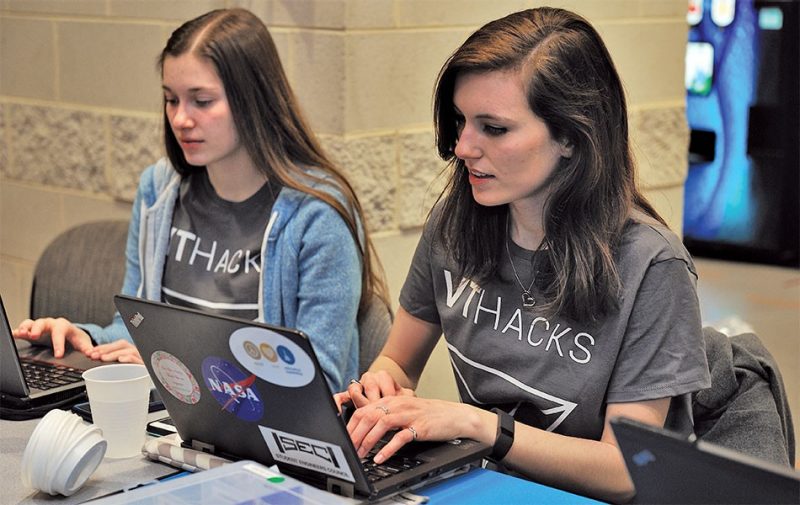 Cyber Security Awareness Month , article
October is Cybersecurity Awareness month! Improve your online experience and increase your security by practicing good online safety habits with these tips and advice.
Date: Oct 16, 2017 -
Article Item
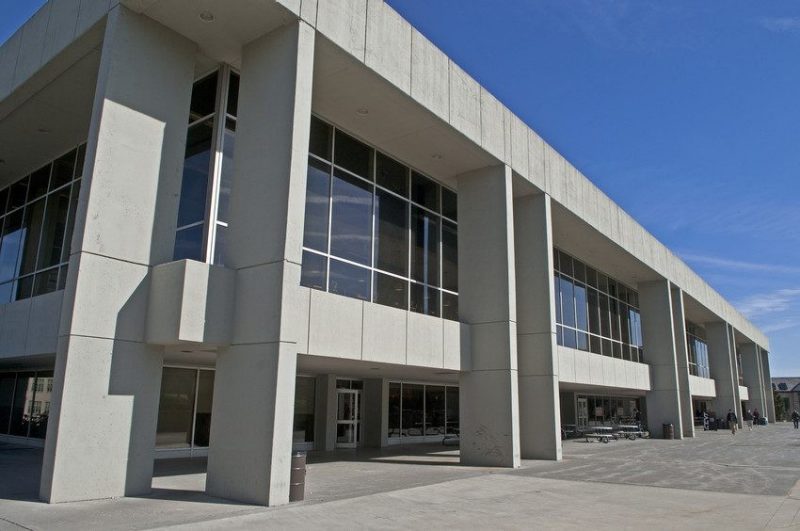 Wi-Fi service added to more outdoor campus locations , article
To enable learning and collaboration outside the classroom, outdoor wireless coverage has been added outside numerous locations throughout campus.
Date: Oct 12, 2017 -
Article Item
 Find and connect to university services on Virginia Tech's OneCampus site , article
OneCampus is the new hub for online academic, business, and personal transactions while at the university.
Date: Sep 19, 2017 -
Redirect ItemVirginia Cyber Range , redirect
At a Sept. 6 ceremony, the Virginia Cyber Range was presented with the 2017 Governor’s Technology Award for innovative use of technology in education. "This Governor’s Technology Award recognizes both the outstanding accomplishments of the Cyber Range to date and its unique potential for long-term impact,” said Scott Midkiff, vice president for information technology and chief information officer.
Date: Sep 07, 2017 -
Article ItemFCC grants streamlined request process for experimental radio licenses on Virginia Tech Blacksburg campus , article
Virginia Tech’s Division of Information Technology was recently granted a Program Experimental License by the Federal Communications Commission.
Date: Aug 31, 2017 -
Article Item
 Information Technology Symposium , article
To support the exchange of information and greater collaboration between all IT professionals at Virginia Tech, the IT Council and the Division of IT are hosting a new program called the IT Symposium. The inaugural event is coming up on the afternoon of April 7, 2017.
Date: Apr 07, 2017 -
Article Item
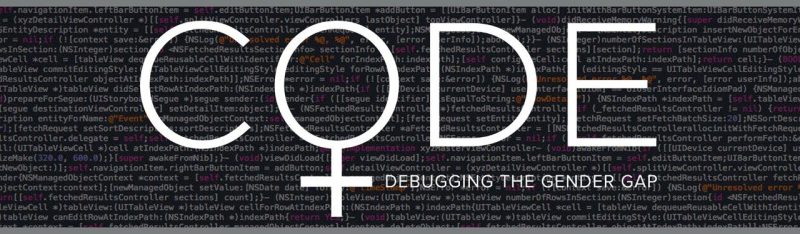 CODE: Debugging the Gender Gap , article
Join us on February 7th for “CODE: Debugging the Gender Gap” a documentary exploring the role of women and minorities in data science and STEM. After the movie, Lauren States leads a panel of software developers and engineers including Jessica Self, Racheida Lewis, Ashima Athri, and Mary Martin in discussing issues of gender and race in today’s technology fields.
Date: Jan 10, 2017 -
Article Item
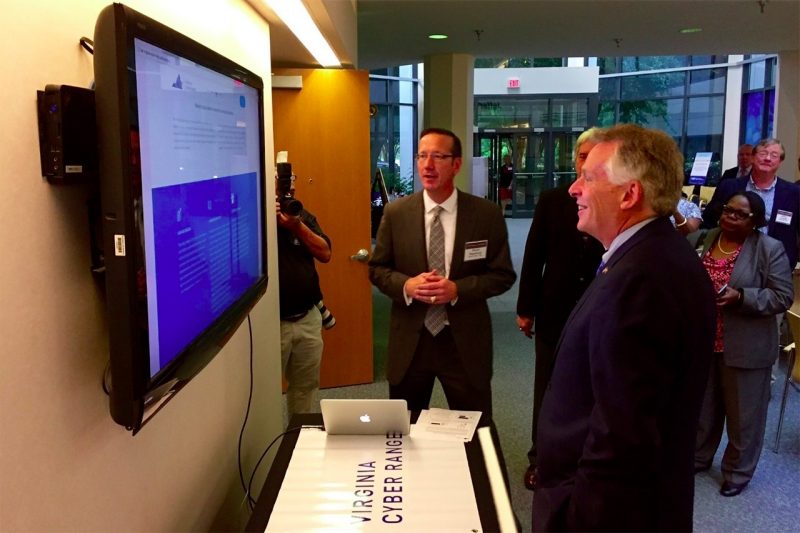 Virginia Cyber Range , article
Working with eight other public institutions of higher education across Virginia, Virginia Tech is leading an effort to create a state-of-the-art platform for cybersecurity education.
Date: Sep 21, 2016 -
Article Item
 Summit , article
Summit, Virginia Tech’s new research proposal management system, simplifies the development and internal submission of research proposals for faculty and research administrators.
Date: Aug 18, 2016 -
Article Item
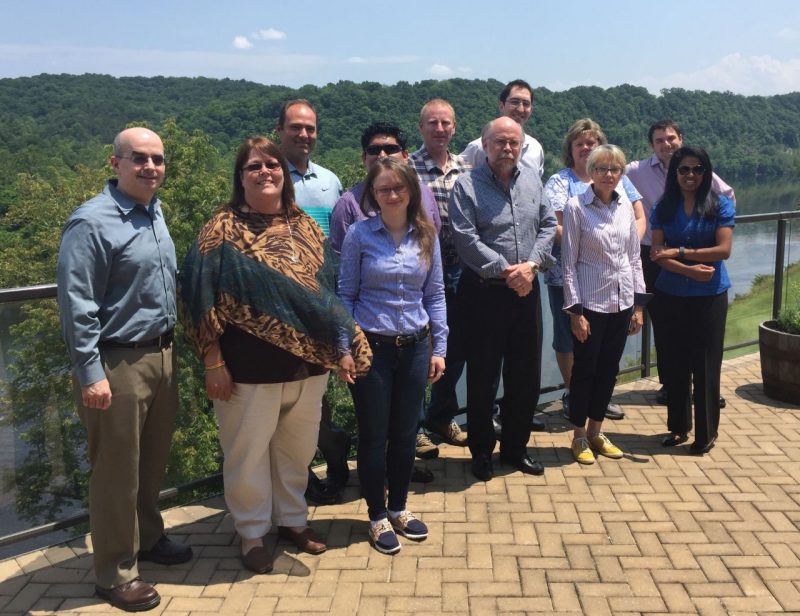 Advisory Council , article
In June, the IT Advisory Council, comprised of 12 Division employees, was formed to help the Division of IT become more effective, user-centered, and fully committed to enhancing the missions of Virginia Tech. The council will gather observations and experiences from all over the Division - what’s working, what needs to be improved; and then help to translate that information into plans for action.
Date: Aug 18, 2016 -
Article Item
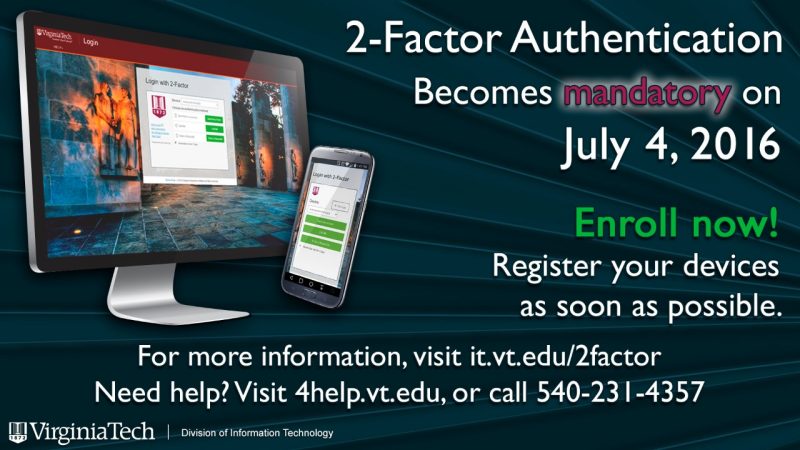 2-Factor Authentication becomes mandatory July 4! , article
2-Factor Authentication will become mandatory for all students, faculty, and staff at Virginia Tech on July 4th, 2016. If you have not yet enrolled, please take a few minutes to do so!
Date: Jun 13, 2016 -
Article Item
 Eduroam wireless network service at Virginia Tech , article
Virginia Tech students, faculty, and staff are encouraged to use the eduroam wireless (WiFi) network, which also enables internet access at participating universities and institutions.
Date: Jun 13, 2016 -
Article Item
 Helping faculty make the switch to Canvas , article
To help faculty make the switch from Scholar to Canvas, TLOS is offering a range of resources including classes, one-on-one canvas consultations, and detailed guides and instructions. The Destination: Canvas campaign will continue through the summer and fall to help connect teaching faculty with the resources they need to get started. Scholar will be decommissioned at the end of the spring 2017 semester.
Date: Jun 13, 2016 -
Article Item
 David Duckett recognized for outstanding leadership , article
In recognition of his strength as a leader, David Duckett has received the university's 2016 McComas Staff Leadership Award, which honors the significant leadership contribution of staff members employed at Virginia Tech for at least one year.
Date: Apr 12, 2016 -
Article Item
 Pearson Hall Opening , article
Pearson, the first of two new Corps of Cadets residence halls on the Upper Quad, contains 234 dorm rooms with study and lounge spaces on each level. The 101,422-square-foot building has five above-ground floors, a basement, and a room for storing the corps' cannon, Skipper.
Date: Dec 10, 2015 -
Article Item
 Employee Certificate Development Program , article
Members of the Information Technology team were recognized for successful completion of the university’s Employee Certificate Development Program.
Date: Jul 27, 2015 -
Article Item
 University 2-Factor Authentication , article
In response to recent phishing scams and related vulnerabilities, Virginia Tech is implementing a high-security login process referred to as 2-factor authentication. An attack on your password isn't enough to allow unauthorized access to information when logging in also requires use of a physical device.
Date: Jun 24, 2015 -
Article Item
 Virginia Tech chooses Canvas as next generation learning management system , article
Virginia Tech has selected the Canvas Learning Management System (LMS) by Instructure to replace Scholar as the university’s primary platform for course management. The highly-rated Canvas LMS is more intuitive, more portable, more efficient, and more deeply connected to the learning experience than Scholar.
Date: Jun 03, 2015 -
Article ItemWhat you should know about tax-related identity theft , article
The IRS defines tax-related identity theft as theft that occurs when someone uses your stolen social security number to file a tax return claiming a fraudulent refund. Employees are urged to be vigilant in protecting their social security number and to be aware of the risk of tax-related identity theft.
Date: Apr 09, 2015 -
Article Item
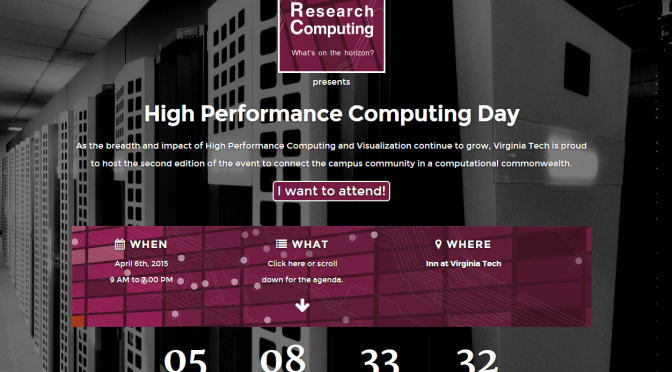 High Performance Computing Day 2015 , article
HPC Day is a day-long showcase of current Virginia Tech supercomputing projects and large-scale research computing. HPC makes it possible for engineering, biological and physical sciences, social research, economics, genomics, and mathematics to leap forward faster than ever, by running simulations and models faster and more comprehensively than was ever before possible.
Date: Apr 06, 2015 -
Article Item
 eduroam Wireless Network at Virginia Tech , article
The secure worldwide federated network access service developed for the international research and education community is known as eduroam (education roaming). This federation can be used at Virginia Tech by faculty, staff, and students, as well as by visitors from participating institutions.
Date: Mar 20, 2015 -
Article Item
 Virginia Tech creates digital repository for Kenya law archive , article
Brett Shadle, associate professor of history at Virginia Tech, has partnered with Kenya Law and the Virginia Tech Discovery Commons to offer a freely accessible digital archive of the Kenya Gazette.
Date: Dec 16, 2014 -
Article Item
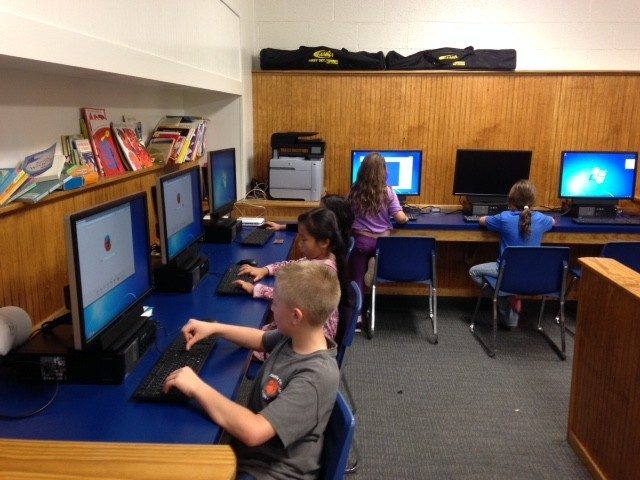 Boys and Girls Clubs Outreach and Engagement , article
Thanks to Computer-Integrated Learning Spaces, a unit of Information Technology within Technology-enhanced Learning and Online Strategies, children served by the James River Boys and Girls Club will have access to technology on par with the learning spaces on the Virginia Tech campus in Blacksburg.
Date: Oct 20, 2014 -
Article Item
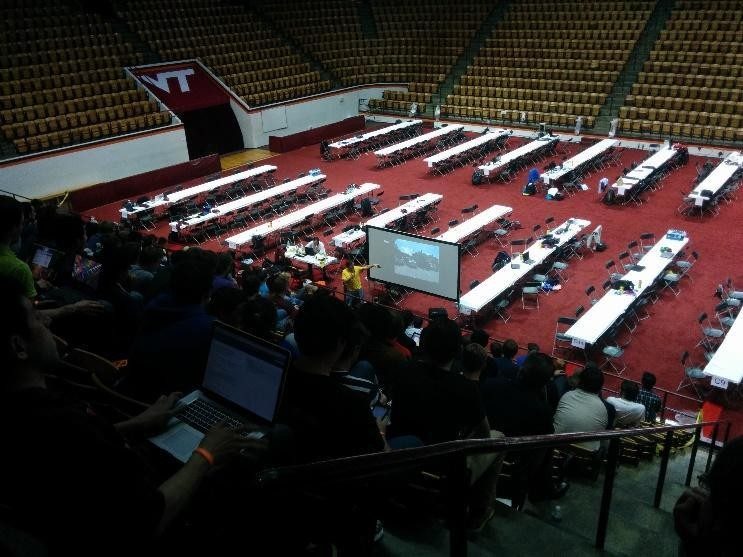 VTHacks , article
"VTHacks" inaugural hackathon took place in April of 2014. Modeled after popular hackathon events proliferating across the east coast of the U.S., participants are challenged to develop innovative ideas for software and hardware development. These events promote applied creativity through intensive collaboration and experimentation over 36 hours, during which participants compete in teams of 2-4 people to develop new ideas, or “hacks.”
Date: Oct 01, 2014 -
Article ItemTech Teams , article
Tech Teams is an initiative administered by Technology-enhanced Learning and Online Strategies (TLOS) to evaluate emerging technologies. Teams are comprised of interested individuals from all over the university. At the conclusion of their rapid evaluation, team members publish their experiences and opinions on the Tech Teams blog.
Date: Aug 01, 2014 -
Article Item
 Collaborative Computing Solutions , article
Collaborative Computing Solutions is a unit of the Division of Information Technology, led by Marc DeBonis. It provides a means to consolidate Microsoft Windows expertise and system administration and provide stable, scalable, and secure customer-focused systems, services and solutions. This new department is responsible for the Hokies Active Directory infrastructure, Exchange email and calendaring, Hyper-V virtualization, Office 365, Active Directory child domain management, and related services.
Date: May 21, 2014 -
Article Item
 Distributed Antenna System , article
The Distributed Antenna System (DAS) improves the cellular coverage and capacity within Lane Stadium, including the stadium bowl, all interior and exterior levels, and the parking lots on the northeast, south and west sides.
Date: May 05, 2014 -
Article Item
High Performance Computing Day , article
HPC Day is being held April 11, 2014. This inaugural day-long event includes tours, short research talks, keynote addresses, and a poster session.
Date: Apr 08, 2014 -
Article Item
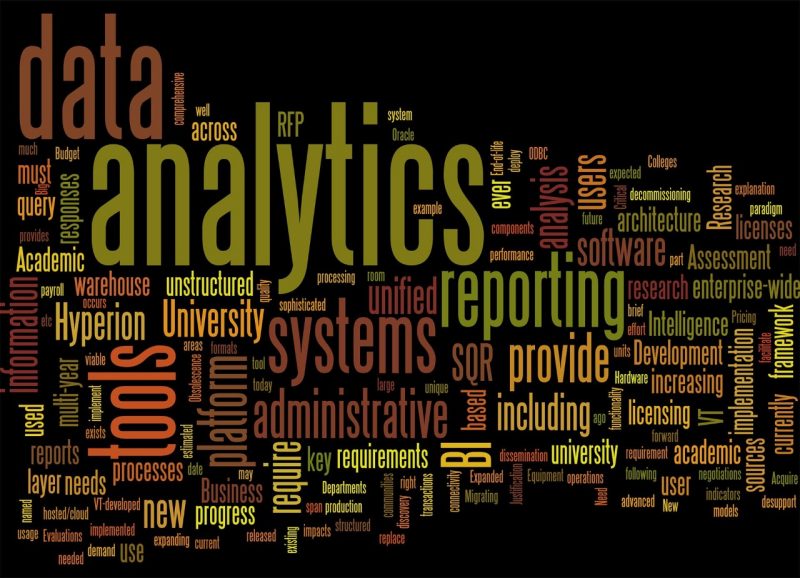 A new business intelligence system for data analytics , article
Virginia Tech has awarded a contract for a new business intelligence system (BIS) to MicroStrategy. The new system replaces aging software, and will expand the functionality of reporting and analytic tools to wider university communities.
Date: Feb 26, 2014 -
Article Item
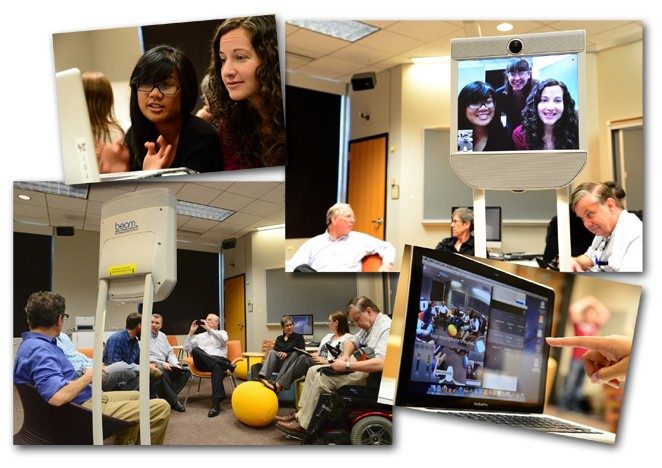 Technology-enhanced Learning and Online Strategies (TLOS) , article
Technology-enhanced Learning and Online Strategies (TLOS) emerges from the redesign and restructuring of two award-winning entities at Virginia Tech, known previously as Learning Technologies and the Institute for Distance and Distributed Learning. TLOS is dedicated to supporting technology-enhanced teaching and learning throughout the university.
Date: Oct 24, 2013 -
Article Item
 VT BlueRidge High Performance Computing , article
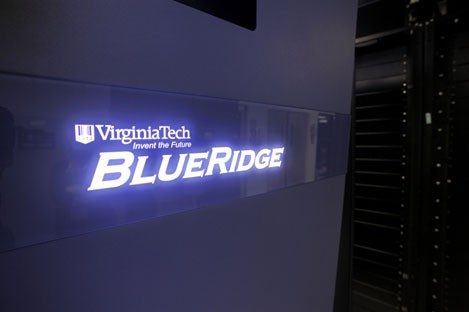
BlueRidge is Virginia Tech’s latest and largest computing asset. This Cray CS300-ACcluster was ranked in the Top500 list, the industry-standard ranking of the world’s 500 fastest supercomputers. Its measured 86.3 teraflops—86.3 trillion floating point operations per second—is more than eight times the computing power provided by System X, which put Virginia Tech on the supercomputing map in 2003.
Date: Jun 07, 2013 -
Article ItemVirginia Tech receives InCommon Silver assurance for identity credentials , article
Virginia Tech became the first university to be certified to assert a "Silver" level of assurance with the InCommon Federation. InCommon, operated by Internet2, provides a secure and privacy-preserving trust fabric for research and higher education, and their partners, in the United States. InCommon operates an identity management federation, as well as a related assurance program. Assurance practices determine the confidence in the accuracy of a user's electronic identity and help mitigate risk for the provider of services within the federation.
Date: May 16, 2013 -
Article ItemUnified Communications , article
The first implementation of Unified Communications was at the end of July 2012 at The Inn at Virginia Tech and Skelton Conference Center. Representing the special case of the hospitality industry, the Inn presented challenges of equipping the hotel’s guest rooms, conference rooms, and public spaces, as well as those administrative offices that have communications services needs more similar to other university departments.
Date: Nov 06, 2012 -
Article Item
 TelePresence , article
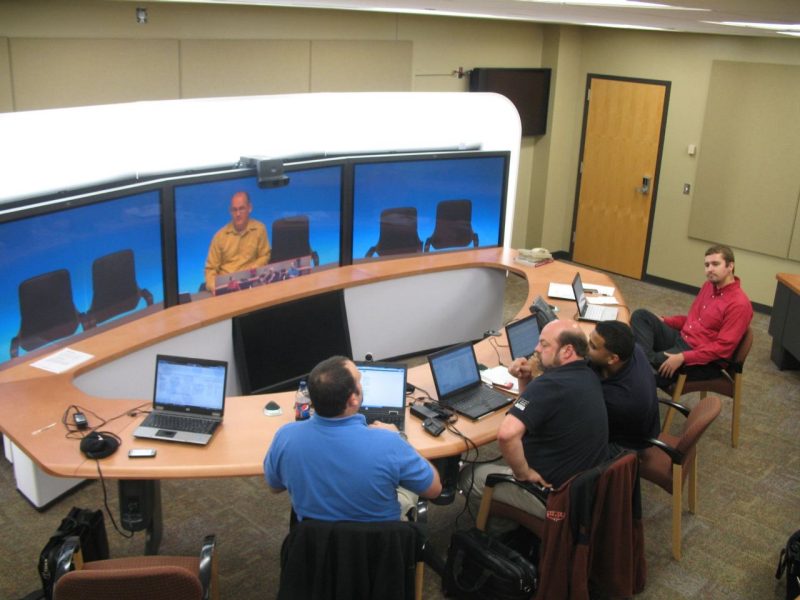
TelePresence improves videoconferencing’s two-way audio and video telecommunication experience by offering high definition video communication, using the best equipment available, and allowing for complete network control. While videoconferencing operates on television style sets, Telepresence’s 55-inch plasma screens allow the “life size” view of the remote location to include important details like facial gestures and real-time eye contact. This immersive experience means participants at a distant site feel as if they were physically present in the room.
Date: Mar 08, 2012 -
Article ItemIBM awarded five-year contract to transform campus telecommunications services , article
“With this contract in place, the Virginia Tech community can begin to look forward to a having well integrated, greatly improved communications services as part of our daily activities,” said William Dougherty, executive director of Network Infrastructure and Services. “We can look forward to a wide range of improvements, from caller ID and more robust conference and collaboration capabilities, to integrated voice, email, and fax messaging, and improved support for cell phones and other mobile devices.”
Date: Dec 15, 2011 -
Article ItemInvent The Future: VT 2020 , article
In Fall of 2010, Erv Blythe and Daniel Wubah, vice president and dean for undergraduate education, charged the 18-member task force with developing a vision plan on the best use of instructional technology at Virginia Tech in the next decade and beyond. Co-chaired by Anne Moore and Peter Doolittle, the task force convened meetings between January and May 2011, hearing presentations and engaging in discussions about the future for instructional technology at large. In particular, the task force sought to envision what Virginia Tech might look like in 2020 in order to realize the possibilities for instructional technology to benefit learning.
Date: Sep 01, 2011 -
Article ItemVirginia Tech Global Server , article
On March 16, 2011, Virginia Tech established a new digital certificate service to issue Virginia Tech Global Servercertificates at no cost to Virginia Tech users. With a contract with Global Sign in place, these new certificates benefit from automatic trust by most popular Web browsers and applications. This relationship provides a major step forward in maintaining website security by providing a trusted digital certificate without the expense of purchasing a commercial digital certificate for each website needing one.
Date: Mar 16, 2011 -
Article ItemDiscovery Commons , article
Discovery Commons is the new research repository managed through Digital Imaging and Archiving. The commons provides a place to view and explore online resources, and offers coordinated support for digitizing, image development, and repository site development. More than just a storage location, the research repository provides an online environment with easy navigation through the content, allowing researchers to find information readily.
Date: Mar 02, 2011 -
Article ItemUnified Communications Coming , article
Virginia Tech is planning a transition from the existing campus telephone and voice mail system to a new system which will enable the university community to access new and emerging technologies. The planned system and communications model is often referred to as Unified Communications.
Date: Dec 03, 2010 -
Article ItemCapital Project for Campus Fiber Optic Improvement Project , article
The university's 2010-2016 Six-Year Capital Plan approved on March 23, 2009 includes a project to improve the campus network and communication infrastructure. The university’s technology infrastructure is integral to supporting the institution’s core mission of teaching, research, and outreach. The current fiber-optic backbone is outdated and needs to be upgraded. The physical infrastructure installed over 20 years ago no longer has sufficient capacity to meet existing demand and will not be able to meet future demand as new facilities come on-line.
Date: Oct 06, 2010 -
Article ItemGrant from federal Broadband Technology Opportunities Program , article
The U.S. Department of Commerce Broadband Technologies Opportunities Program (BTOP) awarded a grant to extend Virginia's open-access fiber optic backbone into the central Appalachian region of the state. The grant enables extension of the state network, adding 110 miles of fiber from Bedford through Roanoke, Botetourt, Craig, Giles, and Montgomery counties.
Date: Feb 11, 2010 -
Article ItemProgress Continues in Virginia Tech's Blackboard-to-Scholar Transition , article
Blackboard is being replaced by Scholar and will no longer be available for course use after August 16, 2010. Learning Technologies offers workshops and other transition resources to assist instructional faculty and graduate assistants with the transition throughout the spring and summer.
Date: Feb 04, 2010 -
Article ItemVT STARS , article
VT STARS - the Virginia Tech Summer Training Academy for Rising Students - has been a program to motivate economically disadvantaged high school students to pursue advanced education in information technology or IT-intensive careers in the sciences and engineering. Funding was, in part, from the Fund for the Improvement of Post-secondary Education.
Date: Nov 06, 2009 -
Article ItemHigh Performance Parallel Computing Bootcamp , article
Virginia Tech and the University of Virginia host the High Performance Parallel Computing Bootcamp from July 28 to August 2, 2008. The bootcamp introduces graduate students, faculty members, and research staff members to the basics of high performance parallel computing.
Date: Jun 23, 2008 -
Article Item
 Information Technology Security Task Force , article
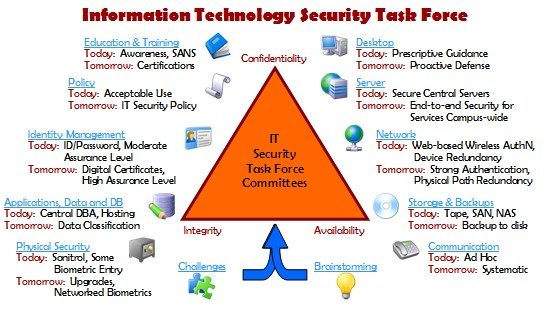
The Virginia Tech Information Technology Security Task Force was formed in December, 2003, to review the security of the university's information technology environment. The goals of the task force are to: • identify current methods of securing VT computing and network resources; • identify ways to improve security; and • propose specific solutions and initiatives to enhance the security of the Virginia Tech information technology environment.
Date: Mar 12, 2008 -
Article ItemCommunications Assistance for Law Enforcement Act (CALEA) Update , article
The U.S. Court of Appeals upheld the Federal Communications Commission's (FCC) decision to extend CALEA provisions to the Internet and providers of facilities-based Internet access or voice-over-IP. For more information, see the American Council on Education's press release or the Information Technology Association of America's (ITAA) Security Implications of Applying the Communications Assistance to Law Enforcement Act to Voice over IP.
Date: Aug 19, 2006 -
Article Item
 eCorridors Program , article
Access to advanced communications and network infrastructure has become critical for ensuring economic competitiveness in today's global economy. Beyond standard telephone systems and basic Internet access, communities are suddenly finding that businesses and other stakeholders are making specific demands for access to fiber optic infrastructure with very explicit route diversity and fiber specification requirements. Communities with advanced fiber, wireless, and "next generation" Internet infrastructure will have a distinct competitive advantage.
Date: Aug 19, 2006 -
Article Item
 NetworkVirginia , article
NetworkVirginiang is an advanced, broadband network delivering Internet and intranet services statewide. It is the result of a project led by Virginia Tech in association with Old Dominion University and the Virginia Community College System to develop universal access to competitive, advanced digital communications services for all of Virginia.
Date: Aug 13, 2006 -
Article ItemLocal Multipoint Distribution Service , article
The Local Multipoint Distribution Service (LMDS) spectrum represents the largest block of spectrum ever auctioned and Virginia Tech was the only university that participated as a bidder in the auction. LMDS enables wireless communications at gigabit speeds - thousands of times faster than most current communications systems for "last-mile" voice and data services.
Date: Aug 13, 2006 -
Article ItemWireless Campus Infrastructure , article
The intent for the wireless campus infrastructure project is that Communications Network Services, a division of Network Infrastructure and Services, will enter into a long-term relationship with a qualified carrier and its equipment and content partners in order to deliver state-of-the-art wireless voice, data, and Internet services as well as unified messaging on and off campus, in order to improve teaching and learning, and to enhance research.
Date: Aug 13, 2006 -
Article ItemEDUCAUSE honors Virginia Tech for innovative achievements , article
For more than a decade, Virginia Tech has demonstrated a strong university-wide commitment to improving learning through technology. "At this institution serving nearly 28,000 FTE students, focused planning has resulted in a multi-disciplinary culture of technological innovation grounded in a suite of supporting programs that includes the Center for Innovation in Learning (CIL), Faculty Development Institute (FDI), Graduate Education Development Institute (GEDI), and the well-known and frequently emulated Math Emporium, which traces its roots to early FDI workshops," according to EDUCAUSE.
Date: Aug 17, 2005 -
General Item
 Bring Your Own Brain: April 28, 2021
Join us for panel discussion exploring neurodiversity in the workplace, with a focus on STEM industries. This Zoom webinar is free and all are welcome to register.
Date: Jun 28, 2021 -
Article Item
 IT Transformation at Virginia Tech , article
The IT Transformation is a program focused on strengthening IT across Virginia Tech. The program aims to increase alignment of core IT organizations, processes, and services; build a stronger culture of collaboration; foster innovation and efficiency across the university; enable comprehensive shared governance; reduce our risks related to cybersecurity; and improve career pathways and support for IT professionals to assist in the recruitment and retention of our valued employees. The IT Transformation seeks to foster innovation and efficiency across the university.
Date: Feb 11, 2022